Why an operator is moving to AI PM
On a meeting with the Director of Commerce in Sikkim, the moment I realized what was next, and what I'm doing about it.
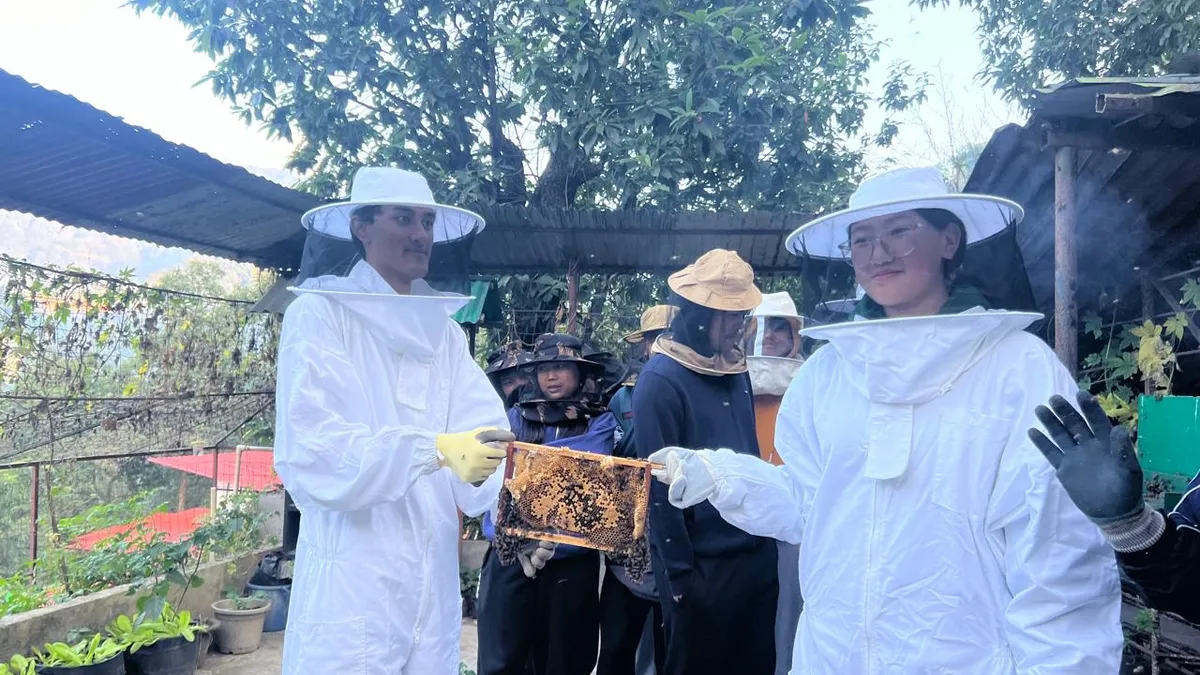
In March, I sat across from the Director of Commerce in Sikkim. We’d been working with his department for two years on a World Bank RAMP partnership for organic honey. The conversation had moved from compliance paperwork to something he’d noticed.
“You keep showing me dashboards,” he said. “How does the AI actually decide what to flag?”
I gave him an answer. It was a reasonable answer. But on the drive back, I realized I wasn’t fully sure of it. I knew what the system did. I knew what it output. I didn’t know — not really — why.
That gap is the reason I’m writing this.
I’ve been an operator for six years. I’ve scaled small businesses from zero to seven figures across India. I’ve built the supply chain for ApiCare from the ground up — 125 farmers, four training programs, government partnerships, a venture that now ships to the EU. I know how to make a business work in places where the spreadsheets break.
But the last twelve months changed something. The tooling I needed didn’t exist, so we started building it. FarmLedger — a WhatsApp-native AI system that lets a farmer in a hill village submit a photo of a hive and get back a credit profile that a bank can actually read — is the result. We’re shipping the MVP this quarter.
Building it taught me three things I didn’t expect.
One. The hardest problems in AI products aren’t model problems. They’re operational ones. Farmers send blurry photos. They send them at 11pm. They send the wrong hive. They send the same one twice. The model is the easy part. The system around the model — the prompts, the fallbacks, the human-in-the-loop, the trust — is the entire game. Operators understand this in their bones because we’ve spent careers building systems that survive contact with reality.
Two. The PM job in AI is a translator’s job. Engineers want to ship the model. Designers want to perfect the interface. Customers want their photo to just work. The PM sits at the intersection and decides what gets shipped, what gets cut, and what gets a hack. That’s not new — that’s what PMs have always done. AI just raises the stakes because the model itself is part of the negotiation now.
Three. The companies that will win in AI products aren’t the ones with the best models. They’re the ones with the best operational empathy. Every AI product eventually meets a user with bad bandwidth, an old phone, an edge case nobody planned for. Whoever has the most patience for that user wins. That’s not a model property. It’s an operator property.
Which brings me to the move.
I’m not pivoting because operations got boring. Operations is the most interesting work I’ve ever done. I’m moving toward product roles because I want to bring six years of operator instinct to a team building the AI tools that operators like me will use. The category needs people who’ve actually run a P&L in a place without reliable internet.
Specifically, I’m aiming at Strategy & Operations and AI PM roles at platform companies — Uber, Bolt, the marketplaces — where the work is dense, the problems are operational at scale, and the AI bets are real. I’ll graduate from my Erasmus Mundus MBA in December 2026 and start full-time in early 2027.
Between now and then, I’m doing four things:
- Shipping FarmLedger to its first 30 paying farms. Real users, real failures, real iterations.
- Closing the technical gap. SQL on StrataScratch, including the Uber problem set. Reading product writing from people who’ve built at scale.
- Writing this blog. One post a month. Things I’m learning, things I got wrong, what I’d do differently. If you’re reading this, you’re the audience.
- Talking to operators-turned-PMs who’ve made this exact move. If that’s you, my email is below — I’d love to learn from you.
If you’re a hiring manager and any of this resonates, I’m reachable at the link in the footer. If you’re an operator thinking about the same move, I want to hear what you’re learning too.
The Director’s question is still in my head. I want to be the person who can answer it next time — not because I’ve memorized the model, but because I’ve shipped the system around it.
Nikhil Pradhan is the CEO of ApiCare, an Erasmus Mundus MBA Fellow, and the writer of this blog. He lives in Vilnius and is moving to Brussels in September 2026.